
Getting our heads around the problem of CO₂
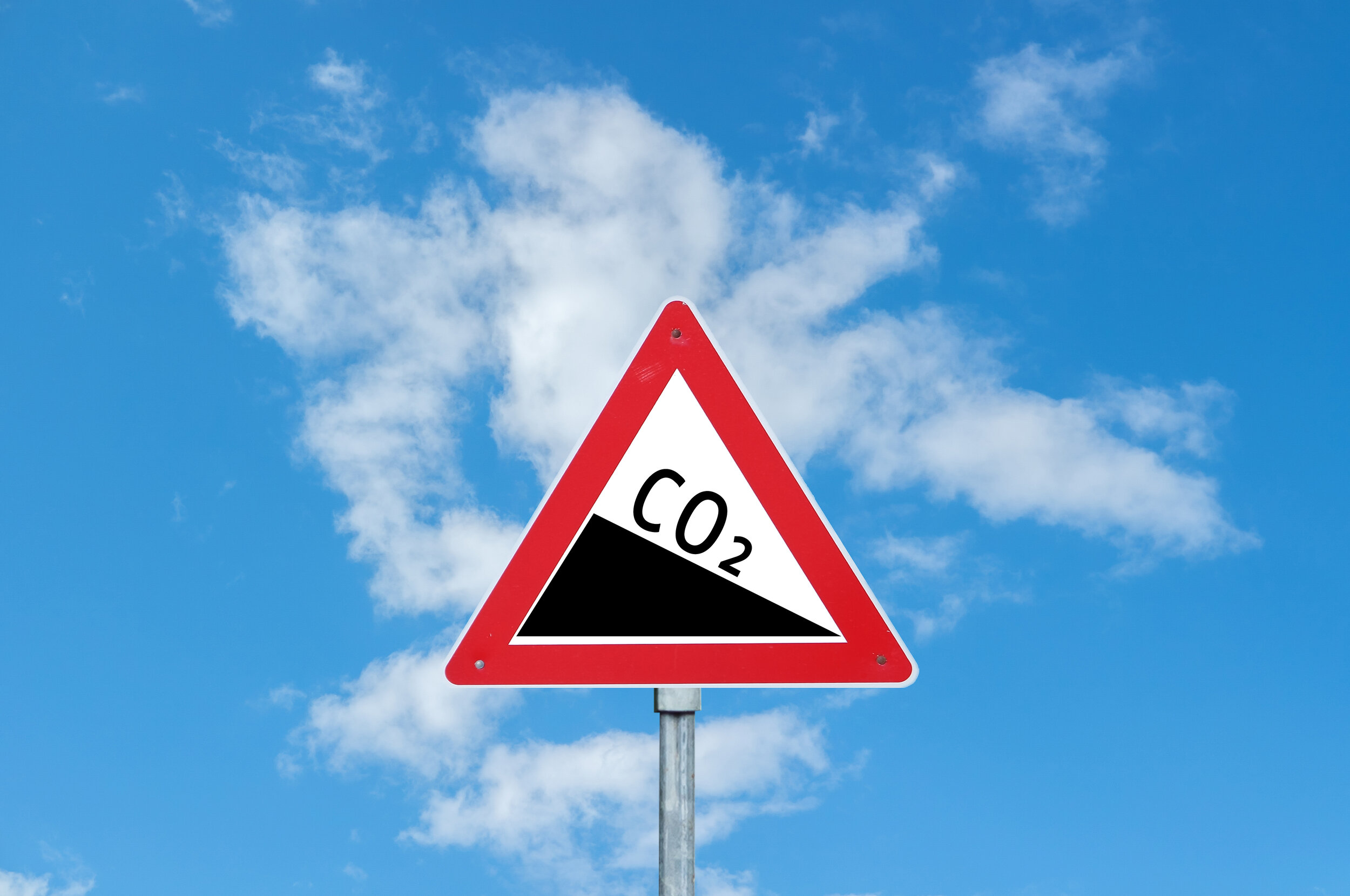
There is so much myth out there on decarbonising operations and why it is really needed. When we look at the numbers, it can be difficult to wrap our heads around them or put them into context. We know that burning fossil fuels leads to CO₂ emissions, but how many litres of CO₂ does your car emit or how much small power station emit or how much is emitted every year in total from man-made emissions? And finally, how do I get perspective on what this really means? These are very poorly answered questions, and it is easy to stick one’s head in the sand and believe that ‘smart scientists’ will come up with a clever solution to get us out of this mess.
Well, let me provide some context on the problem and provide numbers to make your emission relative and recognisable. First, your diesel car: I was speaking with a Swiss start-up a few months ago, who are generating a mobile based carbon capture technology to use on diesel trucks. It captures the CO₂ emissions into a second tank while the truck is running. I nonchalantly asked why they didn’t create negative pressure in the fuel tank and use it to store the CO₂, replacing the fuel as it is burnt. The response: you need 3 times the storage capacity for CO₂ as you do for fuel. Let that sink in. For every litre of diesel burnt in your internal combustion car, you release 3 litres of a relatively inert, useless gas called CO₂ … that has the side effect of causing significant weather changes to our planet. As a thermodynamics professor from Norway said to me “We have become hooked on inefficiently using cheap hydrocarbons to power our society”.
A small power station, let’s use 50MW, produces around 3-4kg of CO₂ per second, that is about 480 tonnes per day. To put that in context, that is an equivalent combined power output of the twin engines on a modern long-haul aircraft. That return 11-hour flight to Los Angeles from London leads to about 24 hours of total run time by the airplane engines, or 480 tonnes of CO₂ … for one trip. How quick can our nature based ‘carbon sinks’ save us from this? You would need 2,896,969 tree seedlings grown for 10 years or 214,651 acres of forest growing for a day to absorb that much CO₂.
Finally, what does this all mean in aggregate? Estimates are that man-made emissions total 40 billion tonnes of CO₂ per year. To put this number into context, imagine around 400 volcano eruptions every year, the size of Iceland’s 2010 Eyjafjallajökull eruption that disrupted Atlantic air travel for 6 months, and you would still be short a few billion tonnes. That is how much CO₂ we are emitting from burning fossil fuels. If you woke up in a world where a new major volcano erupted every day, it would be hard to leave your head in the sand.
But we don’t have those volcanoes to remind us of the impact of our addiction to cheap hydrocarbon-based fuel. There are smart scientists, some of them working at Blakeway Weyburn, attempting to make breakthroughs to capture, utilise and sequestrate that CO₂ but this is only one piece of the emissions puzzle. To truly decarbonise our world, we need to change our behaviours, wean ourselves off inefficient cheap hydrocarbons, regenerate and protect nature-based carbon sinks, develop renewable and green hydrogen-based generation, and find ways to capture and sequestrate the carbon we emit. This is even before we start talking about the circa 1.7 trillion tonnes of CO₂ emitted by humans since 1750.
We are committed to playing our part in solving the decarbonisation puzzle by implementing solutions to capture, utilise and store carbon but this is only one part. We invite you to join us on a learning journey of what decarbonisation means and how we can achieve it together.
